
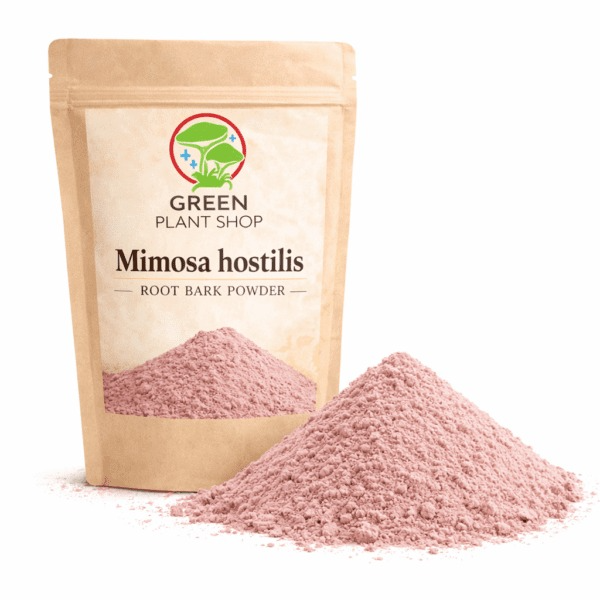
Mimosa Hostilis Root Bark has a long botanical history connected with the tropical and subtropical regions of the Americas. Mimosa Hostilis Root Bark is commonly associated with the plant now botanically classified as Mimosa tenuiflora, a hardy leguminous tree known for its resilience and distinctive bark. Mimosa Hostilis Root Bark has also attracted interest because of its historical relationship with traditional plant knowledge, natural dyes, and ethnobotanical practices. Understanding its origins requires looking beyond modern commercial descriptions and examining the plant, its habitat, cultural background, and traditional applications.
Botanical Identity and Natural Habitat
Mimosa tenuiflora belongs to the Fabaceae family, the same broad botanical family that includes many legumes, shrubs, and trees. The species has historically been known by the name Mimosa hostilis, which remains widely used in commercial and ethnobotanical contexts.
The tree is particularly well adapted to warm, dry environments. It can tolerate challenging soil conditions and periods of limited rainfall, making it an important example of plant resilience. It commonly grows in areas of northeastern Brazil and other parts of tropical Latin America. Its ability to regenerate and establish itself in disturbed environments has contributed to its ecological significance.
Characteristics of the Tree
The plant is a thorny, branching tree or shrub that can develop a substantial root system. Its bark has a characteristic dark, rough exterior, while younger branches may have a somewhat different texture and coloration. Like other members of the legume family, the plant produces small leaves and flowers that contribute to its identification.
The root system is particularly notable from an ethnobotanical perspective. Historically, different parts of the plant have been used by local communities for practical and traditional purposes. However, traditional applications can vary considerably between regions and cultures.
Historical Distribution in the Americas
The botanical history of this species is strongly associated with northeastern Brazil, particularly semiarid regions where vegetation must withstand seasonal drought. The plant's adaptability allows it to survive in landscapes where other species may struggle.
Over time, knowledge about the tree spread through regional communities and eventually became documented by botanists and ethnographers. The older scientific name Mimosa hostilis is still encountered in books, databases, and commercial descriptions, although Mimosa tenuiflora is commonly recognized as the current accepted botanical name.
Relationship With Local Plant Knowledge
Traditional plant knowledge in Latin America frequently reflects practical experience accumulated over generations. Trees such as Mimosa tenuiflora were valued not only for medicinal traditions but also for materials, fibers, fuel, dyes, and environmental uses.
Mimosa Hostilis Root Bark therefore represents only one part of the broader relationship between communities and the plant. Looking at the complete species provides a better understanding of why it became culturally and botanically significant.
Traditional Uses of the Plant
Traditional applications of Mimosa Hostilis Root Bark and other parts of the tree have varied across geographic regions. Historical accounts describe the use of the bark in traditional preparations and practical applications. Some communities have also valued the tree for its durable wood and other plant materials.
It is important to distinguish documented traditional use from modern claims found on commercial websites. Traditional practices are culturally specific and do not automatically establish modern medical effectiveness or safety.
Bark and Natural Materials
Mimosa Hostilis Root Bark has historically attracted attention because bark contains naturally occurring pigments and tannin-like compounds that can interact with fibers and other materials. Plant-based dyes were particularly important before the widespread availability of synthetic coloring agents.
The bark's natural coloration and chemical composition have made the species interesting to people researching traditional textile practices and natural dyeing. Results can vary depending on plant material, preparation methods, water chemistry, and the material being colored.
Cultural and Ethnobotanical Importance
Ethnobotany examines how people interact with plants and how botanical resources become integrated into cultural traditions. From this perspective, Mimosa Hostilis Root Bark is interesting because its history intersects with regional plant knowledge, material culture, and traditional practices.
Researchers studying the species may examine historical records, local terminology, ecological distribution, and traditional knowledge. Such research is valuable because it places the plant within its cultural environment rather than viewing it simply as a commercial botanical ingredient.
Traditional Knowledge and Modern Research
Modern scientific interest in Mimosa tenuiflora has expanded considerably. Researchers have investigated various aspects of the species, including its ecological characteristics and naturally occurring compounds. However, laboratory research should not be interpreted as proof that a traditional application is medically effective.
Mimosa Hostilis Root Bark is sometimes discussed online in contexts that go far beyond its documented botanical and traditional history. Responsible educational material should distinguish established botanical information from anecdotal claims, commercial marketing, and unsupported health assertions.
Ecological Characteristics and Sustainability
One of the most notable features of Mimosa tenuiflora is its ability to survive in demanding environments. Its resilience makes it relevant to discussions about vegetation recovery, soil stabilization, and sustainable land management.
Because roots and bark are plant tissues, harvesting them can affect individual plants and local populations. Sustainable sourcing therefore deserves attention whenever botanical materials are purchased or studied. Responsible suppliers should provide information about geographical origin, harvesting practices, processing, and species identification.
Why Species Identification Matters
Accurate botanical identification is important because common names can refer to different plants in different regions. Historical terminology can create additional confusion because scientific names may change as botanical classifications are revised.
For this reason, researchers and consumers should look for the accepted botanical name, plant family, geographic origin, and other identification details when evaluating botanical materials.
Modern Interest in Mimosa Hostilis Root Bark
Mimosa Hostilis Root Bark remains a subject of interest among botanists, ethnobotanical researchers, natural-dye enthusiasts, and people studying traditional plant materials. Its combination of ecological resilience, distinctive bark, and documented cultural history gives it a unique place within the study of tropical American plants.
At the same time, information about the material should be approached carefully. Online sources may combine historical information with unsupported claims or instructions for chemical processing. Educational discussions are most useful when they focus on verified botanical characteristics, cultural context, responsible sourcing, and documented traditional applications.
Frequently Asked Questions
1. What is Mimosa Hostilis Root Bark?
Mimosa Hostilis Root Bark refers to bark obtained from the roots of a plant historically known as Mimosa hostilis and commonly classified today as Mimosa tenuiflora. The species is native to parts of tropical and subtropical Latin America.
2. Where does the plant naturally grow?
Mimosa tenuiflora is strongly associated with northeastern Brazil and other areas of tropical Latin America. It is particularly well adapted to warm environments and seasonal dryness.
3. Why is Mimosa Hostilis Root Bark studied ethnobotanically?
Mimosa Hostilis Root Bark is studied because the plant has a history of traditional and practical applications. Researchers may investigate its cultural significance, natural compounds, ecological characteristics, and historical use of plant materials.
4. Is Mimosa tenuiflora the same plant historically called Mimosa hostilis?
Yes. Mimosa hostilis is an older scientific name that remains widely used in popular and commercial terminology, while Mimosa tenuiflora is the botanical name commonly used in modern classification.
5. What should consumers consider when sourcing botanical bark?
Consumers should consider species identification, geographic origin, harvesting practices, sustainability, and applicable local regulations. Reliable botanical information should also distinguish traditional historical use from modern medical or chemical claims.
Conclusion
The story of Mimosa Hostilis Root Bark begins with a remarkably resilient tropical tree and extends into the fields of botany, ecology, ethnobotany, and traditional material culture. Its association with northeastern Brazil, historical plant knowledge, natural materials, and traditional practices helps explain its continued interest today. Studying the species through a botanical and cultural lens provides a more balanced understanding than relying on modern commercial descriptions alone. Responsible sourcing, accurate identification, respect for traditional knowledge, and careful interpretation of scientific evidence are essential when exploring the history and significance of this distinctive plant.